
Notice the strain
Identify the moment that most needs greater clarity, steadiness or protection from adult conflict.
Free co-parenting download
The Co-Parenting Check-In helps you identify what is creating strain, return to your child’s needs and choose one realistic communication change—without expecting perfect agreement.
Free PDF · 7 pages · Use privately or with a co-parent
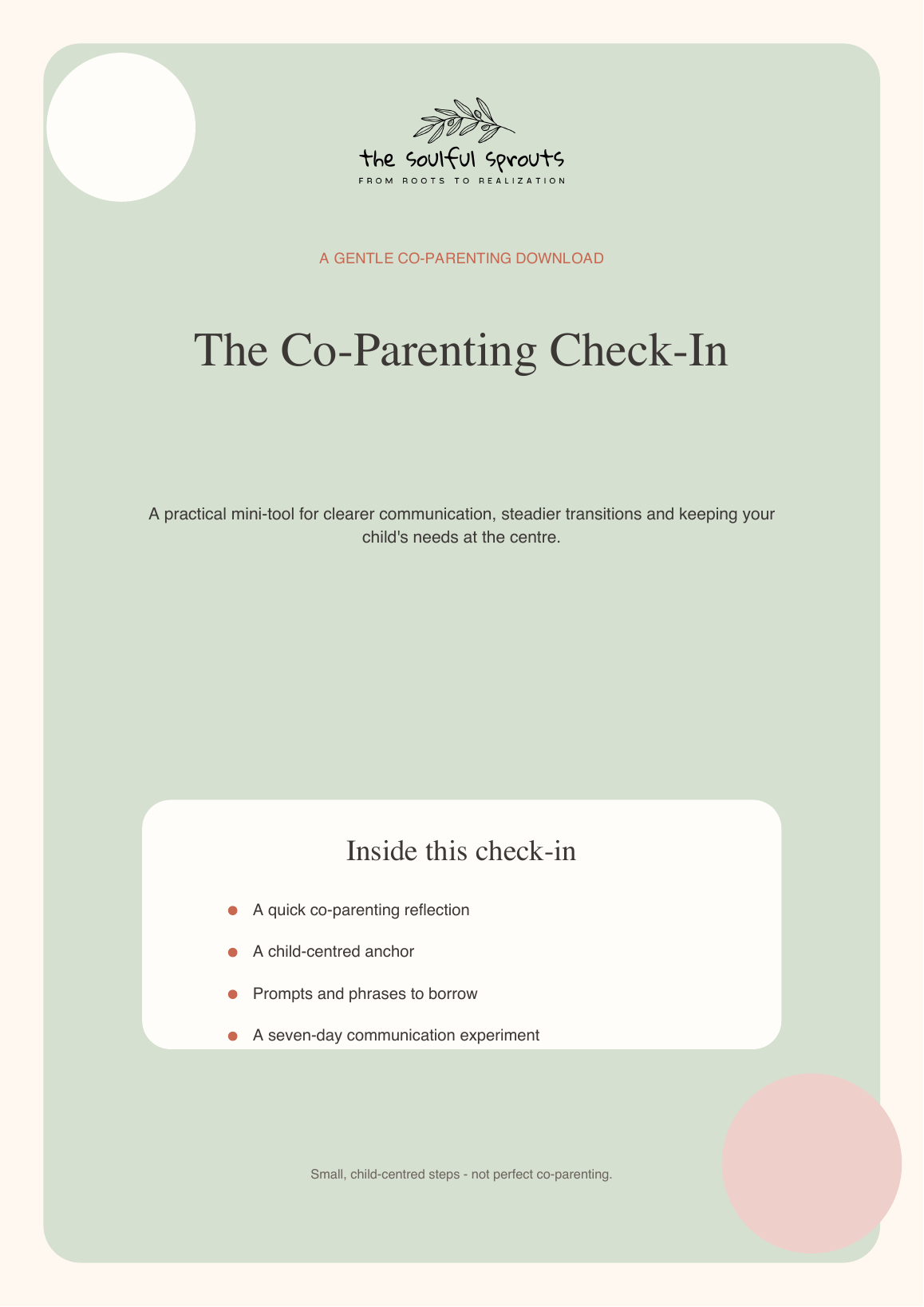
What is inside
Identify the moment that most needs greater clarity, steadiness or protection from adult conflict.
Use five child-centred anchors: predictability, permission, protection, continuity and voice.
Try concise examples for practical requests, changes of plan, tense handovers and different household rules.
Choose a repeatable communication change and observe its effect over seven days.
This may help if
How to use it
Start with what is within your control instead of using the questions to evaluate the other parent.
Focus on a specific request, handover or information-sharing pattern rather than the entire history.
Share adult information directly and let your child have a voice without carrying the final decision.
Your free copy
Enter your name and email to receive the seven-page Co-Parenting Check-In. You can choose separately whether you would also like occasional resources and updates from us.
Helpful reading
Use these practical articles alongside the check-in to prepare one message or reduce the pressure your child may be carrying.
Questions
Yes. It is a complimentary seven-page educational resource from The Soulful Sprouts.
It is designed for adults parenting across different homes or caregiving arrangements, including separated parents, divorced parents and other co-parenting families.
No. You can use it privately to reflect on your own communication and choose one practical change within your control.
No. It is a general educational reflection tool. For legal, safeguarding, mental-health or high-conflict concerns, seek appropriately qualified professional support in your location.
Do not use this resource to initiate direct communication where there is abuse, coercive control, threats or an immediate safety concern. Seek qualified local support and use an appropriate supported communication route.